
Gratitude and Generosity at Work
Gratitude and generosity are twin themes that echo throughout the Bible. Gratitude is the acknowledgment of God's gifts, while generosity is a tangible expression of that thankfulness, often through cheerful giving and service to others. This PRS.work series is a companion to the Gratitude and Generosity at Work Bible.com reading plan from the Theology of Work Project, which explores these themes across 20 books in the Old and New Testaments, with a particular focus on how these ancient insights might be useful for you in the modern workplace.

Genesis Chapters 12-14: Godly Entrepreneurs Look Different (27 minutes)
Abraham provides an example for Godly entrepreneurs. He trusted God and depended every day on God’s guidance and provision. Through him we see that Godly work is willing to depend on God’s guidance and authority and desires to grow widely as a blessing to all the world.

Genesis Chapters 15-18: The Rewards of Hospitality (26 mins)
The story of three travelers who visited Abraham and Sarah in Genesis 18 demonstrates what generous hospitality looked like in the ancient world, and what we can do to practice hospitality in our work today.

Genesis Chapters 40-42: Should You Invest in Someone Else's Success? (28 minutes)
We may invest in the success of another who rises beyond our reach, only to be discarded when our usefulness has been spent. Does this mean that our work has been for nothing? The story of Joseph while a prisoner in Egypt offers us insight into just such situations.

Ruth Chapters 1-2: God at Work through Hardship (20 minutes)
The book of Ruth tells the extraordinary story of God’s faithfulness to Israel in the life and work of three ordinary people, Naomi, Ruth and Boaz. As they work through both economic hardship and prosperity, we see God’s faithfulness create opportunities for fruitful work. Their faithfulness to God brings the blessing of provision and security to each other and the people around them.

Nehemiah Chapters 12-13: Restoration of Covenant Life (21 minutes)
Sabbath-keeping was central to God’s first covenant people, and their vows were threatened by economic interaction with those who did not honor the Sabbath. In today’s context, we may want to examine whether our current round-the-clock culture of commerce puts us in a similar situation.
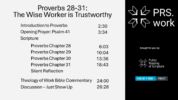
Proverbs Chapters 28-31: The Wise Worker is Trustworthy (27 minutes)
Trustworthiness is the foundation of wisdom and virtue. God created people to work in concert with each other, and without trust this is not possible.
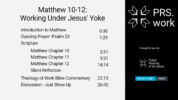
Matthew Chapters 10-12: Working Under Jesus' Yoke (27 minutes)
Through Jesus' yoke, we feel his pull, his guidance, his direction. Far from being a burden on us, Jesus describes this type of work as restful.

Luke Chapters 10-11: The Good Samaritan At Work (23 minutes)
Being a Good Samaritan in the workplace means cultivating a specific awareness of the needs of the other. A conscientious Christian is the one who puts time and resources towards these neighbors.
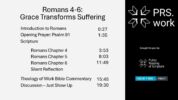
Romans Chapters 4-6: Grace Transforms Suffering (20 minutes)
For those who are suffering, Paul offers encouragement by reminding his readers that through Christ we have already “gained access” to God’s “grace in which we stand” (Rom. 5:2). By living Christ’s obedient life of faith and faithfulness in our own circumstances, we experience God’s life-giving grace that can bring us joy and peace at work, at home, and in every circumstance of life.
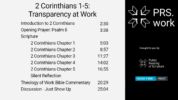
2 Corinthians Chapters 1-5: Transparency at Work (25 minutes)
As Paul moves into the body of his second letter to the Corinthians, he addresses the complaint that he had not been open and honest with them. Although he promised to visit Corinth again, Paul had backed out twice. Was Paul being insincere or speaking out of both sides of his mouth?

2 Corinthians Chapters 9-11: You Can't Out-Give God (17 minutes)
In urging the Corinthian believers to give generously, Paul is aware that he must address a very human concern in a world of limited resources. Some of his hearers must have been thinking, “If I give as altruistically as Paul is urging me to give, there may not be enough to meet my own needs.” Making use of an extended agricultural metaphor, Paul assures them that in God’s economy things work differently.
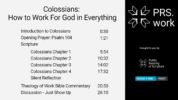
Colossians: How to Work For God in Everything (26 minutes)
In God’s kingdom, our work and prayer are not two separate activities that need to be balanced, but two aspects of the same activity. When we work in Jesus’ name, we work to accomplish the work God wants accomplished.